Unfortunately, needs are growing faster than resources. Amidst so many adversities, members of the United Nations Refugee Agency (UNHCR) remain on the ground providing protection and assistance, and working hard to identify children who have been left alone, lost, or orphaned. The non-profit organization issued a call to increase international support and announced it will need $38.2 million (around 32.9 million euros) in 2026 to address the growing needs in northern Mozambique. Funding received this year barely reaches 50% of the $42.7 million (about 38.7 million euros) required.
Essential services overwhelmed The Representative of the United Nations Children's Fund (UNICEF) in Mozambique, Mary Louise Eagleton, highlighted that "this increase in the number of children and girls forced to flee is pushing families into desperate situations, while essential services—health, education, child protection, water, sanitation, and hygiene—are overwhelmed by the magnitude of the needs." Some 4.8 million people need help in the African country, more than half of them children, with childhood also suffering the worst consequences of the climate crisis and poverty.
It is estimated that 920,000 children and girls were affected by cyclones alone in 2025, and nearly 400,000 had their education disrupted due to damage or loss of classrooms. The numbers are chilling.
"The humanitarian response is reaching its breaking point at a very dangerous time for the youngest, with rapid displacements and a high risk of devastating cyclones in the coming months," Eagleton pointed out. She emphasized that "funding cuts are threatening our ability to respond to the most immediate needs." She made a dramatic appeal to the government, the United Nations, humanitarian and development partners, civil society, communities, and the private sector to provide additional support to collective efforts.
"The purpose is to guarantee the safety and well-being of children and girls, while addressing the causes of the conflict and fostering resilience to climate crises in Mozambique," the official added.
Amina is just one of the thousands of children who had to flee their homes to seek safety and depend on the aid the UNHCR Foundation can secure, which offers compassionate individuals monthly predetermined amounts to donate to the aid fund: $2,900, $3,900, $4,900, and $10,500. The minimum amount is to provide sanitary materials to women and girls in Somalia.
The first shadows fall on the torred earth-streets of the country's northern villages, and the lashings of scorching heat no longer rise from the ground but emanate from the fires multiplying in the hamlets. As every night, the districts of Erati and Memba, in Nampula, are subjected to devastating attacks and looting by armed groups, mainly the jihadist Islamic State in Central Africa (ISCA), as determined by the Argentine News Agency. Violence had already been unleashed against Cabo Delgado.
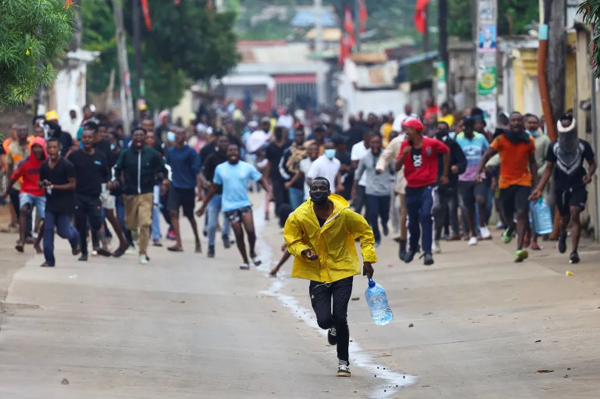
Surviving children and girls flee their homes as best they can, amidst the confusion, smoke, and screams, to avoid being captured or perishing under the flames. Amina, barely a baby, runs and runs with her two brothers while houses are looted and set on fire. They manage to cross the line of fire and seek refuge in neighboring towns. They have to walk barefoot for days until they find a safe place to eat and sleep. They have no documents, no support, they survive.
Displaced In just the last few weeks, nearly 100,000 people have been displaced as the attacks expand into new provinces. Now, reports of serious violations against the rights of children and girls, including kidnappings, recruitment, and exploitation, have become commonplace. The context exacerbates vulnerability: protection, development, education, and healthcare are already more than threatened.
Since July, more than 300,000 people are displaced: children and girls represent 66%. Routes are blocked, looting is increasing and becoming more violent. The camps are overwhelmed.