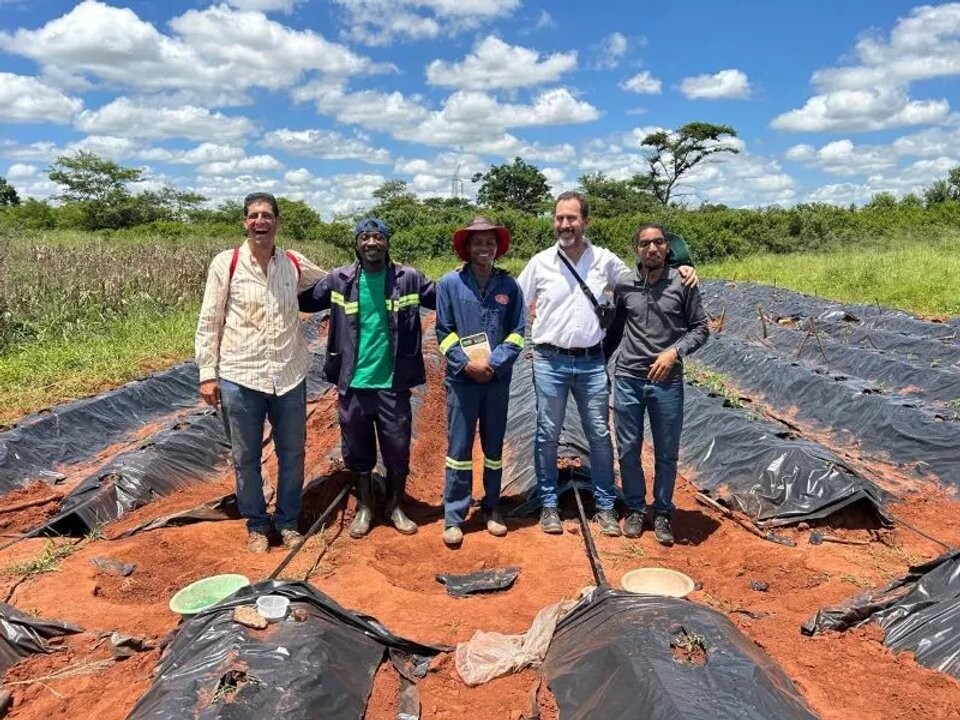
A team of specialists from Argentina's National Institute of Agricultural Technology (INTA) is providing advice to improve tomato production during the summer in Mozambique, with the goal of strengthening food security and promoting more efficient production systems. Tomato is a staple food in the Mozambican diet, but its production is concentrated in the dry season (between April and September), which leads to surpluses and low prices for producers during that period. In contrast, there is a shortage and sharp price increases during the rainy season, between December and March (summer), according to INTA. The Argentine technical assistance is part of an agreement between the ArgenINTA Foundation and the NGO TechnoServe, under the Mangwana Project. INTA technicians supervise productive trials and provide training in the provinces of Manica and Sofala to adapt sustainable technologies that allow open-field tomato production during the summer, a period when the Beira Corridor is characterized by high rainfall and elevated temperatures. The work strategy is organized in two stages. The first, planned for 2025-2026, focuses on the installation of experimental plots at the Sussundenga Agricultural Station, managed by the Mozambican Institute of Agricultural Research (IIAM), where the performance of different tomato hybrids and varieties is evaluated under sustainable management and in conditions of high temperatures and precipitation. The second stage, scheduled for 2026-2027, involves the transfer and adaptation of the technologies refined in the trials to real production systems.